God’s Little Loophole: A Note on Faith, Law, and Holy Week
Every Holy Week, Spain performs one of its most intricate cultural balancing acts.
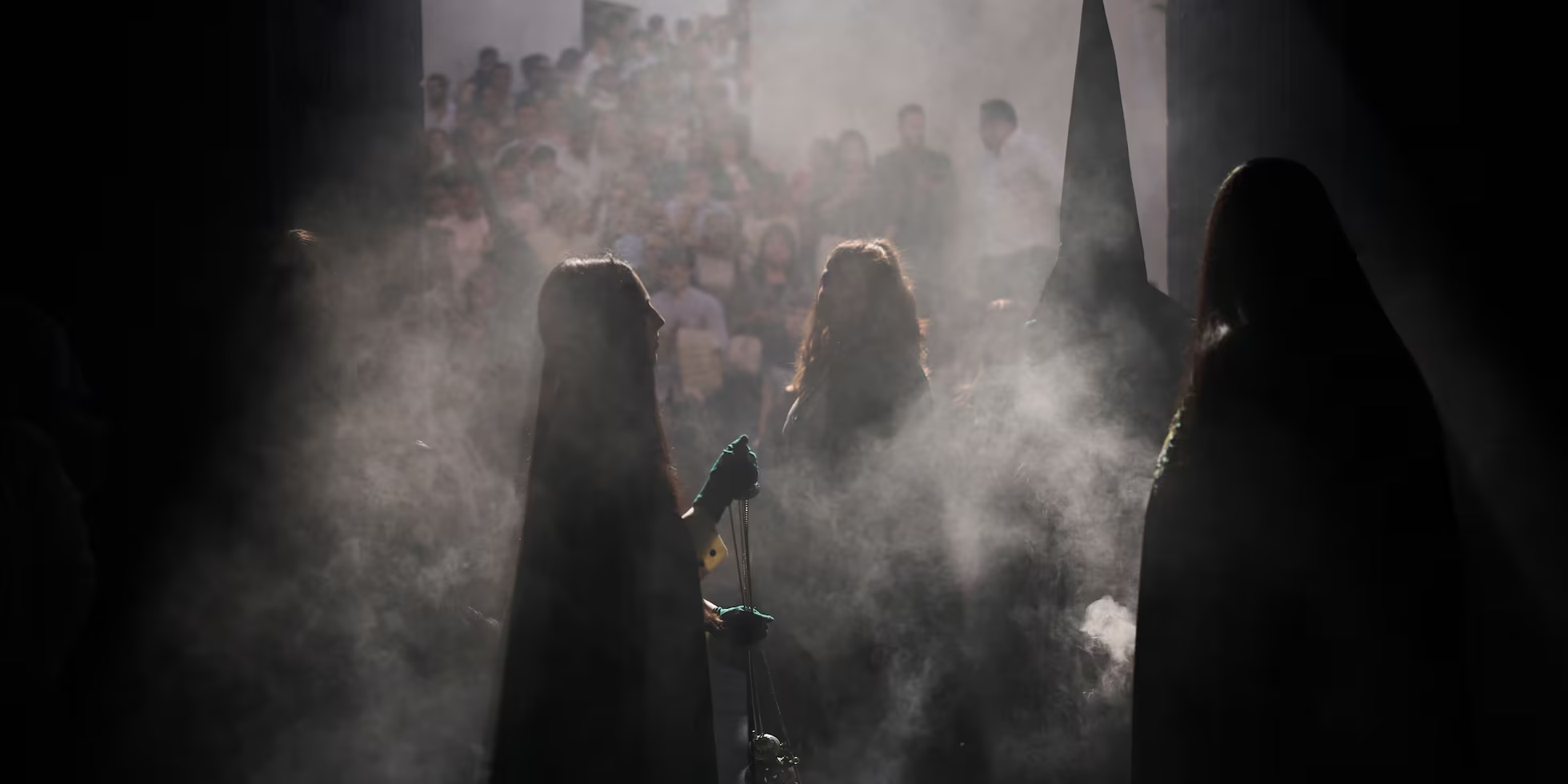
The processions move through ancient streets with choreographed solemnity. Drums echo against stone walls. Candles burn. Brotherhoods trace routes that predate the modern state itself. For many, it is heritage. For others, devotion. For nearly everyone in Spain, it is—at the very least—familiar.
It is also, if one looks closely enough, a useful moment to ask an uncomfortable question.
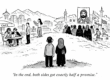
This year’s controversy in Sagunto—where a religious brotherhood once again voted to exclude women—has been widely and rightly criticized. The legal argument is straightforward: in a constitutional democracy, discrimination on the basis of sex is not something one simply defends by invoking tradition. Spain’s laws are clear on that point.
And yet.
The more one follows the argument, the more one notices that it stops short—very precisely where things become complicated.
Because the same constitutional framework that is now being invoked against a few hundred men in a Valencian brotherhood continues, quietly and systematically, to accommodate a much larger and more entrenched form of exclusion. Not incidental. Not accidental. Structural.
The Church’s internal rules remain its own. But its funding, in part, is not.
That tension—between private doctrine and public money, between legal principle and political settlement—is what the essay explores. Not as an attack on faith, nor as a dismissal of tradition, but as a question of consistency: what exactly does equality before the law mean when exceptions are large enough, old enough, and sufficiently normalized?
Holy Week, with all its beauty and weight of history, is perhaps the ideal time to ask it. Not because it is the problem, but because it makes the underlying arrangements visible.
If you’re interested in the full argument, you can read it here:
Like the processions themselves, these questions have a way of returning each year. The answers, so far, have been rather more static.