The Week Pedro Sánchez Broke the Geopolitical Operating System
It’s a strange moment in the imperial timeline.
A 79-year-old property developer with the diplomatic instincts of a casino bouncer—threatened to cut off all trade with Spain because Spain declined to let American bases on its soil be used in an illegal bombing campaign against Iran.
This is apparently how alliances work now.
You provide the territory.
They provide the war.
Everyone smiles for the press photos and pretends this is normal.
Except this week someone declined the script.
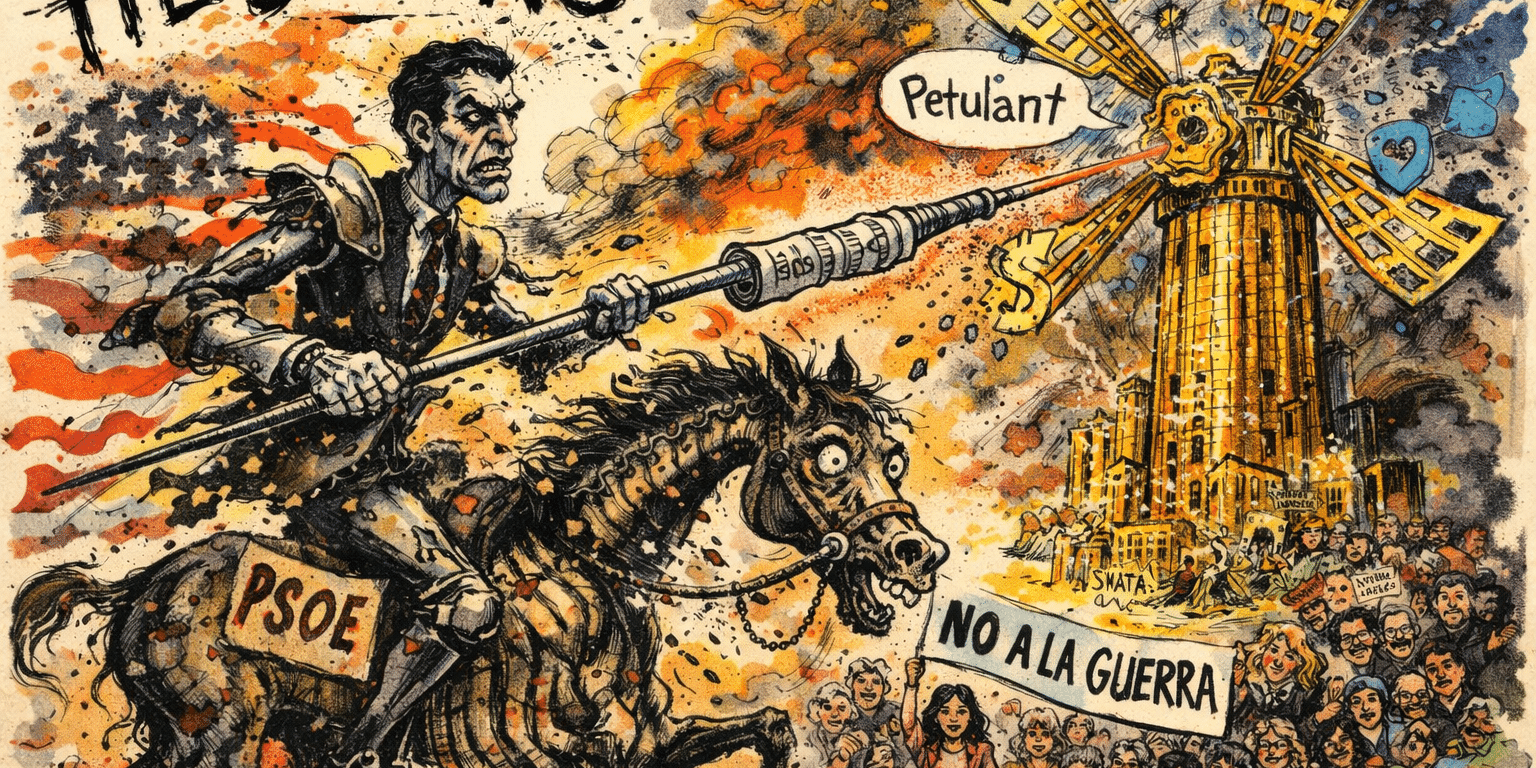
Pedro Sánchez, a tall Socialist from Ávila who built his career on parliamentary arithmetic and sheer political stubbornness, stepped to a podium and did something so simple it briefly short-circuited the geopolitical operating system.
He said no.
No to using the bases.
No to the quiet assumption that international law applies mainly to countries without aircraft carriers.
No to the ritual nod that keeps the machinery humming.
It’s a small word. Two letters. One syllable.
But in the current global order it behaves like a glitch in the software.
Watching the reaction unfold—trade threats, diplomatic theatrics, right-wing op-eds screaming about the return of the Caliphate in Al-Andalus, the usual imperial huffing and puffing—I kept thinking about a certain gentleman from La Mancha who read too many books about chivalry, climbed onto a horse that was barely a horse, and rode out to fight windmills because the alternative was to accept the world as it was.
Which is how I ended up writing a piece about Pedro Sánchez, Donald Trump, the American empire, international law, and Don Quixote.
The result is “He Said No: Pedro Sánchez, the Knight of the Sad Countenance.”
You can read it now in CounterPunch (English):
https://www.counterpunch.org/2026/03/06/he-said-no/
And I’m especially pleased that a Spanish translation is running in El Salto, so readers in Spain can see how this particular windmill looks from the outside:
https://www.elsaltodiario.com/pedro-sanchez/dijo-no-pedro-sanchez-caballero-triste-figura
Because every so often the old Cervantes story crawls out of the archives and starts wandering through contemporary politics again.
There’s a windmill.
Everyone says it’s just a windmill.
And somewhere a man looks at it, tightens the saddle on a dying horse, and decides that someone—probably unwisely—ought to ride at the damn thing anyway.