🎭 Bienal, Vargas Llosa y un teatro vacío: nueva crónica en CTXT
(English below)
Hay eventos que se venden como “fiestas de la cultura”, pero huelen más a cóctel de poder y subvención.
En Cáceres montaron una bienal con 650.000 € de dinero público, pantallas gigantes, discursos sobre “la libertad” y, sí, Vargas Llosa elevado a santo laico del neoliberalismo.
Lo que faltaba era público.
Y verdad.
Mi nuevo texto para CTXT no es una reseña: es una crónica del vacío, una visita guiada al decorado donde la “alta cultura” se mezcla con la política, los egos y las fake news de etiqueta.
Un teatro vacío que aplaude a nadie.
Una región que sirve de escenario para los mismos viejos trucos.
Y un servidor intentando no dormirse entre tanto ruido.
📖 Léelo aquí:
👉 CTXT – “Cuando un teatro vacío aplaude a los carniceros de la verdad”
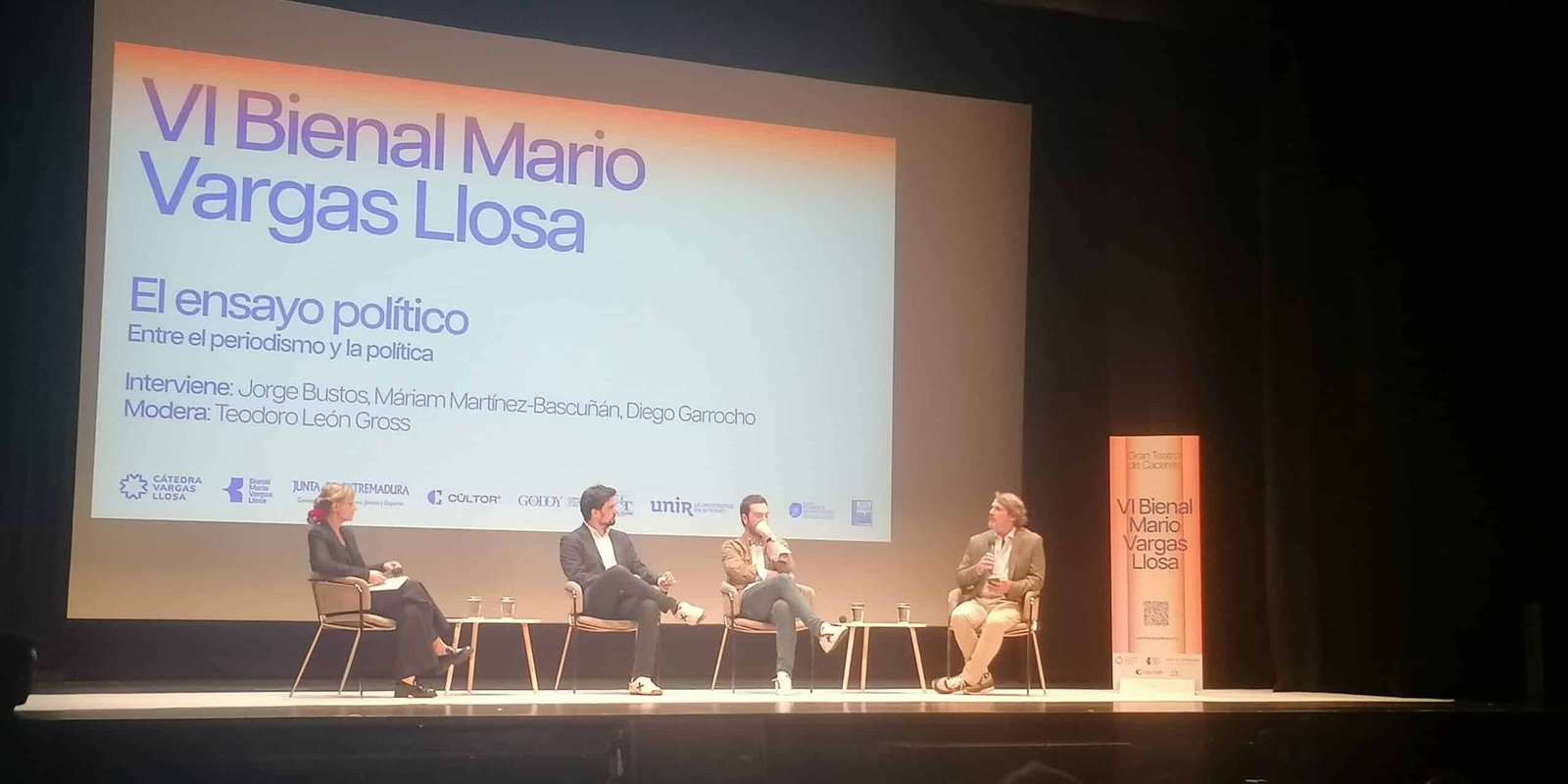
The ornamented pre-war theatre lay scandalously empty—a gilded reliquary of triumphs whispering “once upon a time.” There, in the front rows, a few small clusters of elderly ladies remained faithful to the restorative power of hair spray, their fur wraps draped over the backs of seats as though reluctant guests at their own nostalgia party. Nearby, well-dressed couples flicked furtive glances at their phones, orchestrating last-minute dinner plans with the urgency of people avoiding the main act. And then there was him: the lone bachelor, white-haired, sports-coat rumpled, isolated in his row. He perched as if on sentry duty, guarding the illusion of a crowd that might arrive—an audience of one, or perhaps only himself. I half expected him to clear his throat and deliver applause on behalf of the entire province.
The ushers, sensing the imminent disaster (or at least the imminent photographic humiliation), quietly urged the few to move closer to the stage—officially on the recommendation of the sound technician, who declared that proximity would improve “acoustics” and “sense of ambience.” In truth, it felt like stage-craft: compress the few into a visual cluster, manufacture a crowd out of thin air. It was crowd taxidermy. After all, this was to be the main attraction of the Friday night lineup—a highlight of the €650,000 extravaganza funded by the regional government to bring the VI Bienal de Novela Mario Vargas Llosa to town. These were cultural fireworks on a provincial fuse — and empty chairs are harder to spin than anything else in public life.
I scanned the room for any of the politicians who had lined up to proclaim these events would be a pillar of Cáceres’s bid to become European Capital of Culture. They were conspicuous by their absence. Perhaps they had left early to attend the canapé hour somewhere else. Wait—canapés? Free wine? No such thing. Without the wine and finger food, the great and the good evidently found fewer reasons to linger.
The region’s cultural elite, too, seemed to have indicated their displeasure: a boycott, quiet but pointed—regional writers and intelligentsia who felt ignored and sidelined in these grandiose spectacles, refusing to serve as decorative shrubbery for imported literary royalty. They did not simply stay away; they withheld their presence. Their chairs remained empty. Their applause unpaid.
The speakers took their places: four high priests of the Spanish opinion pages, each one at least two generations younger than the average spectator — a detail made almost comic by their footwear. Not a polished leather sole on stage. No patrician Oxford, no brogue with ancestral sheen. Instead, immaculate running shoes in polar white — the kind bought not for running but for appearing casual on television. The footwear said it all: fresh, modern, dynamic, but with no intention of ever touching the ground. Only Máriam Martínez-Bascuñán broke the spell — dressed for the occasion, notebook in hand like someone who still believes critical thought requires verbs, paper, and ink. She took actual notes. The others simply basked in the glow of their own discursive muscle memory.
But then it began: a certain stench — faint at first, then growing, thickening, blooming into a noxious bouquet. Before long it was unavoidable: the spectre of Trump had entered the theatre. Not metaphorically. Not rhetorically. I mean it materialized, the way bad perfume occupies a lift. The Orange Phantom. The Saffron Poltergeist. The Cheeto Caesar of Western collapse. He smothered the stage like industrial smog, seeping into their monologues, soaking their metaphors, fogging up any thought that dared look elsewhere.
The conversation — supposedly about political essays, journalism, and the responsibilities of public discourse — locked itself into a ghost-ridden holding pattern. Fake news? Yes. Lies? Yes. Threats to democracy? Of course. But always at a safe distance. Always over there — in America. In Trumpistan. In some cartoonish elsewhere, conveniently exotic.
It was astonishing. Here were three former heads of opinion sections — people who have steered front pages, framed narratives, elevated some scandals while burying others, curated outrage like art dealers curate ‘events’ — and yet the only villain they dared summon was foreign, fluorescent, and safely ridiculous. No mention of Spain’s own truth-butchers, no mention of how alternative realities flourish just as wildly on Iberian soil, and certainly no mention that some of the very newspapers and columns these people have worked for have not always been innocent bystanders in the great carnival of distortion.
They condemned the poison of fake news — but seemed almost allergic to the mirror.
Fake news and alternative realities? Yes, of course. They were eager to discuss those. But only from a safe distance. There was an unspoken détente, a gentleman’s agreement sealed somewhere between backstage makeup and the green room: we will condemn the plague, but only in foreign lands. The lies would be American, the delusions Brazilian, the manipulated truths Russian, British, global—anything but domestic. The air reeked of it, this pact. You could smell the caution, the deodorized pretense, as if honesty itself had been sprayed with lemon-scented disinfectant.
Because to speak of Spain—to speak of our fake narratives, our manufactured heroes, our obedient newspapers, our alternative-realities-on-demand—would risk rupturing the comfortable fantasy the organizers needed: that this gala, this half-empty theatre, this €650,000 cultural offering to the gods of Europe, would later be narrated as a towering success. A beacon. A triumph. A visitation of brilliance upon the provinces.
Better, then, to speak of lies “out there.”
Better to treat distortion as an imported problem, like an invasive insect that only infests other orchards.
Better to keep the conversation antiseptic, global, and heroic.
Because if the panelists acknowledged what everyone in the hall already sensed—that the very event they were participating in might soon be repackaged and sold as something it never was—well… then the whole illusion would collapse. The ushers, the dignitaries, the press officers, the empty seats, the absent politicians, the boycotting writers, the phantom audience—all of it would become part of the same grotesque alternate reality.
And so the ghost of avoidance hovered over them, smiling with immaculate teeth.
They spoke on. Carefully. Elegantly. And always somewhere else.
When the lights finally rose, a thin applause fluttered across the room — fragile, obligatory, and over almost before it began. The ushers smiled with the strained cheer of people who had been instructed to smile. A photographers crouched and contorted themselves into angles known only to war correspondents, doing whatever was necessary to avoid capturing the vast archipelago of empty seats. The dignitaries slipped out first, gliding toward the nearest exit with the speed of men and women late for more interesting affairs. The couples checked their dinner bookings. The lone bachelor stood, adjusted his rumpled coat with the dignity of a widowed tenor, and vanished back into the Cáceres night.
By next week, the communiqué will be written, polished, and released: “Massive turnout. Intellectual success. A city that vibrates with culture. The Gran Teatro brimming with debate and public enthusiasm.” It will be printed, shared, and archived for posterity. And the myth — repeated often enough — will harden into civic truth. The people, it will say, came. The city, it will say, shone. The event, it will say, mattered.
And perhaps, in time, even we will start to believe it. Because in this age of curated triumphs and imported villains, it is always easier to applaud the story than to confront the seats.
“Fake news,” they warned us.
And then, with immaculate composure, they wrote tomorrow’s headline.