The Grammys’ Quietest Category: Songs for Repression
Where are the anthems of repression?
If reactionary movements claim cultural dominance, mass followings, and moral certainty, one might reasonably expect a soundtrack to match. Where are the rousing MAGA and far-right hymns that people will still be singing in fifty years? Where are the unforgettable choruses celebrating racial division, exclusion, or the romance of authoritarian nostalgia? Who, exactly, is writing the timeless melodies praising the Ku Klux Klan, mass deportations, or the dismantling of civil rights?
The answer is strikingly simple: almost no one. Beyond a handful of loud but forgettable novelty performances — the predictable theatrics of figures like Kid Rock chief among them — the cultural cupboard is remarkably bare. There is no enduring canon, no globally recognized repertoire, no generation-spanning tradition comparable to the immense legacy of progressive protest music. Movements that define themselves by grievance, fear, and resentment rarely inspire songs that people actually want to sing.
That absence is precisely what my latest column explores: why political movements grounded in dignity, equality, and collective aspiration have produced decades of unforgettable music, while movements rooted in exclusion and reaction tend to generate only marches, slogans, and propaganda noise.
You can read the full piece in Spanish here or read the English version below.
The Grammys’ Quietest Category: Songs for Repression
In 1939 a haunting song appeared. It began, Southern trees bear a strange fruit…Black bodies swinging in the Southern breeze. Strange fruit hanging from the poplar trees.
It was not an exercise in atmosphere, nor a morbid indulgence in metaphor. It was an accusation—measured, poetic, and devastating—leveled at an everyday practice in the conservative American South. This was not a celebration of brutality, nor a sentimental meditation on segregation. It was a cold, unflinching rebuke of a system that preserved its authority through terror and rope.
Billie Holiday wasn’t singing a marching chant. The song did not bark slogans or demand obedience. It did not flatter the listener into a sense of inherited righteousness. It asked instead for something far more dangerous: reflection. It demanded that ugliness be named, and that those benefiting from it feel, however briefly, the moral vertigo of recognition.
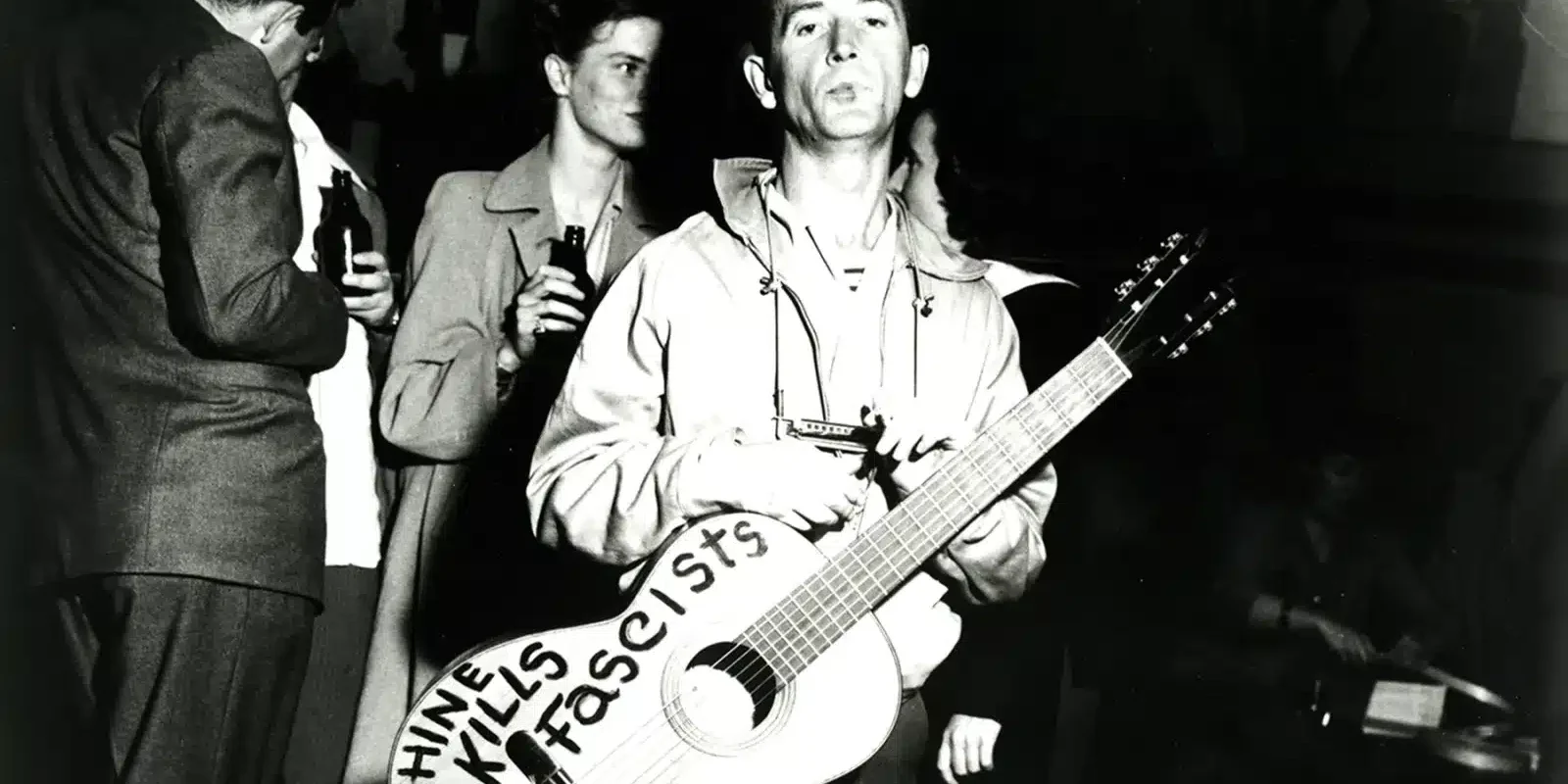
The progressive canon of protest music is embarrassingly rich, stretching from Woody Guthrie’s dust-choked populism to the gospel-honed urgency of Mavis Staples and Sam Cooke, and the global moral thunder of Bob Marley. Here in Spain, cantautores like Luis Pastor turned repression into lyric resistance; in Latin America, singers like Víctor Jara gave defiance a human voice.
Against this abundance stands a curious silence.
Where, one might ask, are the protest songs of the right?
Conservatism, when pressed into musical form, tends to produce not songs but commands. When it sings at all, it does so in the register of the anthem or the march—music designed not to persuade but to synchronize. One can point, of course, to Wagner, though invoking him proves the point rather than refutes it: bombast in service of myth, melody conscripted into ideology, art reduced to pageantry. This is music as architecture—grand, intimidating, emotionally airless—useful for rallies and pogroms, but hopeless as art.
The reason for this asymmetry is not mysterious. Progressive movements, whatever their failures —and they have many—are animated by aspiration. They sing toward something: dignity, equality, freedom, repair. They allow the artist to imagine a world not yet realized and to invite the listener into that imagining.
Reactionary movements, by contrast, are defined by negation. They do not dream; they guard. They do not yearn; they resent. Their project is not creation but restoration—usually of a past that never existed outside selective memory. How, precisely, does one write a love song about removing healthcare? Compose a ballad celebrating the abduction of children at borders? Find a chorus for invading a sovereign nation, or a bridge that rhymes with disenfranchisement?
The continued relevance of Springsteen, the emergence of voices like Jesse Welles, and the unbroken lineage from Strange Fruit onward offer an unflattering reminder: the problem is not liberal bias in the arts. It is that authoritarian and reactionary ideas are, at their core, artless—hostile to ambiguity, allergic to compassion, and incapable of honoring the irreducible dignity of the human spirit.
Art requires risk. Protest art requires moral courage. And melody, like language itself, rebels against cruelty when pressed into its service. This is why authoritarians march while progressives sing—and why, long after the banners are folded and the slogans forgotten, the songs remain.