The Art of the ‘Zancadilla’
At the beginning of my book Stories Left in Stone: Trails and Tales in Cáceres, Spain, my friend Carlos Blay takes me deep into the Cueva de Maltravieso.
There, in the dark, is the oldest known expressions of art in Europe (it was in the world until a recent discovery in Asia): a handprint on stone, pressed there more than 60,000 years ago. The birth of beauty, as we understand it.
But it isn’t just one hand.
Over thousands of years, different peoples passed through this place. They left their marks too, layer upon layer, stories overlapping, not replacing what came before but adding to it. A quiet, powerful record of what it means to belong, to connect, to build something together across time.
That’s part of what makes Cáceres such a compelling candidate for European Capital of Culture 2031: a small city in a historically overlooked region imagining itself not just through its past, but through a shared European future.
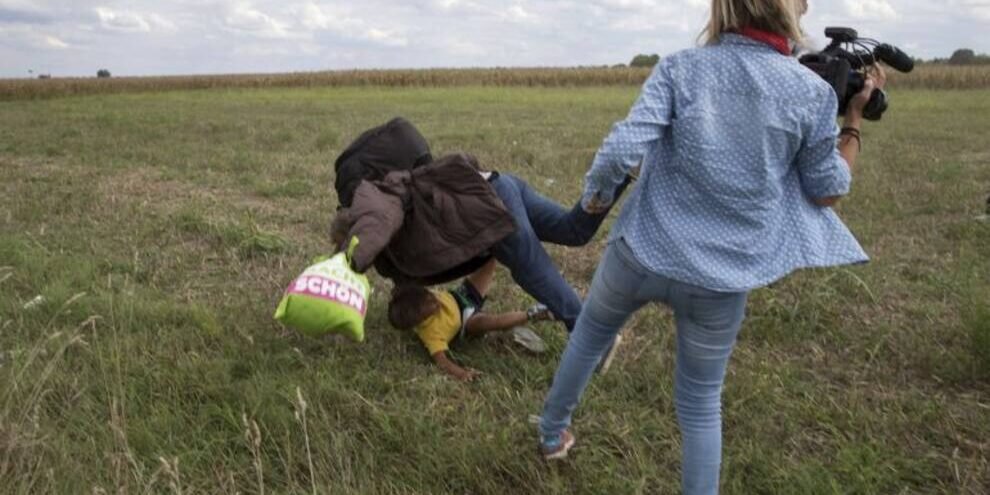
And then came the zancadilla. The word ‘tripping’ or ‘sticking a stick in the spokes’ just doesn’t do it justice.
Not from outside. Not from a rival city. Not even from elsewhere in the region. From within.
If you’re curious what I mean—and why it matters far beyond one city in western Spain—I’ve written about it in my latest column in HOY: “The Art of the Zancadilla.”
The Art of the Zancadilla
There is something almost balletic about a well-executed zancadilla. The word — from zanca, that long, ungainly stride — conjures a particular image: one leg slipping behind another, a brief moment of geometry, and then gravity. The zancadilla, in its figurative sense, is trampa, ardid, asechanza — the elegant treachery Cervantes put into Sancho’s hands. To poner una zancadilla is to understand that the most devastating blows are rarely thrown from the front.
And yet there is a particular cruelty to the zancadilla delivered not by an adversary, but by the person walking beside you.
I was a sceptic. When Cáceres entered the race for Capital of European Culture 2031, I assumed Europe had the game fixed, championing its prestige cities, its easy sells to committees who prefer their culture with a recognizable narrative and backdrop. A small, provincial city in Spain’s poorest region seemed unlikely to move that needle.
I was wrong. Beautifully so.
In March, the Ministry of Culture confirmed what the believers had dared to hope: Cáceres had passed the eliminatory phase, one of four Spanish finalists. They valued its project — La cultura es el camino, built around Transcultura — for its honesty, its long-term vision, its European projection. Extremadura, the region Spain usually treats as a picturesque afterthought, placed itself on the map not by gesturing at past glories but by imagining a future. The cave of Maltravieso in Cáceres, where hands pressed against stone 66,000 years ago in the oldest known act of European art, suddenly had new meaning. A region reaching back to the very birth of beauty, reached forward to Europe with the same instinct: Look. Connect. Belong.
The city was euphoric. So were those of us who had underestimated it.
And then came the zancadilla.
The attack wasn’t from a rival city. Nor from Brussels. The leg that slipped behind Cáceres belonged to the home team. The incoming President, head of the very regional government whose support the candidacy had celebrated, was once again treasonous to her word. Days after the triumph, Guardiola signed a pact built around prioridad nacional: priority for nationals over non-nationals in access to public services, housing, subsidies… A phrase whose surface is administrative and whose grammar is much older and much darker — the language of us versus them, of those who belong and those made, by political fiat, not to. The vocabulary of armbands and pogroms that we believed the continent had buried with the defeat of fascism. The language of exclusion Europe once swore off.
Suddenly Extremadura was in the international press — not as a vanguard region building European bridges through culture, but carrying headlines that were the precise antithesis of everything the European project espouses. In December, the European committee will judge Cáceres on its vision of transcultura: that belonging is created, not rationed; that a region shaped by poverty and emigration knows something essential about solidarity. It will do so while our regional government simultaneously governs in reverse.
This is not merely a zancadilla thrown at a candidacy. It is one thrown at an ideal.
The handprint on the wall of Maltravieso is still there. I am here. I made something beautiful. Others came, and in meeting, something new was made — not less, but more.