Censorship is Chaos Disguised as Order
Banksy, Justice, and the Violence of Silence
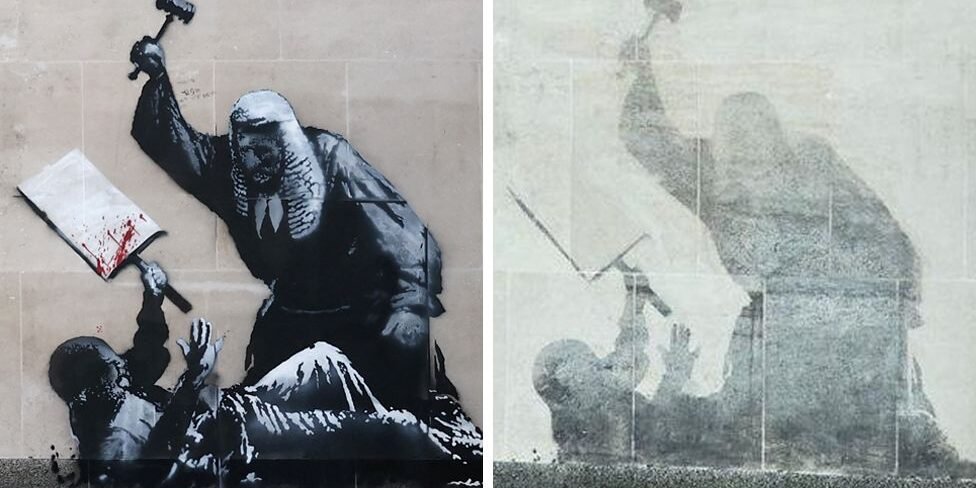
The piece begins with a striking image: a Banksy mural that appeared overnight on London’s High Court — a furious depiction of justice turned executioner, of law reduced to raw violence. Within hours, authorities erased it. But their attempt at “cleaning” only deepened the message. The ghost image left behind became a haunting metaphor for how censorship always fails.
Censorship doesn’t erase; it stains. It leaves a scar — a reminder that truth was once there, and someone wanted it gone.
From London to Spain: The Politics of Erasure
In the article, I draw parallels between the UK’s crackdown on protest art and Spain’s uneasy relationship with its historical memory. Across cities and regions — from Madrid to Cáceres — monuments are removed, murals disappear, and uncomfortable histories are bleached from public view. But the ideas behind them persist, resurfacing in politics, language, and daily life.
Whether it’s the erasure of art or the rewriting of history, both acts share the same goal: to control what we remember and what we forget. Yet the scar always remains — and it’s that scar, not the whitewashed wall, that tells the truth.
Why You Should Read This Piece
If you care about freedom of expression, art as resistance, or the fight over public memory, this essay offers a lens that connects London’s erased graffiti to Spain’s silenced past. It’s about how societies deal with dissent — and how even in silence, the echoes of resistance refuse to die.
👉 Read the full essay on CounterPunch:
Censorship Is Chaos Disguised as Order