Remember When?
There was a time when people spent the rest of their lives hiding the fact that they had been Nazis. Now, increasingly, the far right doesn’t bother hiding at all.
“Remember When?” looks at what happened to that old social taboo — and at something today’s extremists may not have considered: the internet remembers. Every photograph, post, rally and declaration is becoming part of an archive that some future generation may have very different feelings about.
The piece was originally published in Spanish in my Camino a Ítaca column for HOY.
Read the original in Spanish at the link, or scroll down for the English translation.
Remember When?
A Dispatch From the Collapsing Future
There was a time, not so long ago, when it was considered to be a bad thing to be a Nazi. Not embarrassing. Not controversial. Bad. Relationship-ending. Career-ending. The sort of thing people lied about for the rest of their lives.
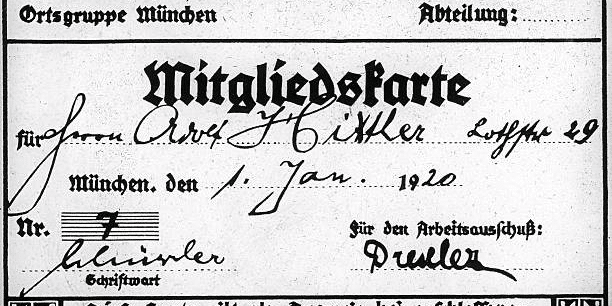
In Germany, a Nazi past was the family secret nobody discussed. When it did surface, excuses followed. Privacy laws were so strict that NSDAP records remained sealed for decades. Even the descendants of Nazis were often denied access to the documentary evidence of what their families had done.
If not for the Americans, that history might have vanished with the Führer’s body. In the smoldering ruins of the Reich, the U.S. Army seized millions of Nazi Party membership records and stored them in Maryland for decades. In February 2026, without a press release or ribbon-cutting ceremony, NARA quietly uploaded nearly sixteen million digitized Nazi membership documents to the internet. Free. Searchable.
The shame wasn’t confined to archives. For years it played in comedy and film. Remember Jake and Elwood in the Blues Brothers? Illinois Nazis, literally driven off a bridge. The audience laughed because that was still the social contract. Nazis were the punchline, the very bottom of the barrel.
For a while, it held.
Then something happened to the immune system.
Not all at once. First irony. Then algorithms. Then certain politicians discovered that saying the quiet part out loud was no longer disqualifying. Eventually, entire movements stopped bothering to deny what earlier generations would have taken to the grave.
Which leaves us with a cold, specific question: when the pendulum swings back — and it will; humanity likes to flirt with the brink before retreating — who will do the outing?
The governments? The ones currently cosplaying Weimar-era grievance politics? Those who broke the cordon sanitaire? They are not about to build a searchable database of their own membership. The institutions are compromised. The ministries of justice are occupied elsewhere. As for national archives, the current American administration is not exactly known for its enthusiasm in this particular area.
But the data exists. Ordinary Germans, sitting in their apartments, are running surname searches and discovering what their families spent eighty years not discussing over Christmas dinner. The technology does not care about the politics of the moment. The receipts do not expire.
Future accountability will not arrive through official channels wearing a badge. It will come the way it always does — via the obsessive, the grieving, the furious, and the meticulous. The amateur genealogists. The investigative journalists working out of underfunded newsrooms in countries whose names the powerful cannot pronounce. The open-source intelligence communities already risking their necks, mapping every fascist symbol at every rally, one photograph at a time.
Someone is already building the archive. Not because governments asked them to. Because governments never do. Every post, every photograph, every donation, every rally selfie is becoming a future footnote. The database is writing itself.
The question is only whether we will have the social immune system left to be appropriately disgusted when we read it.
There was a time when people spent the rest of their lives hiding that they had been Nazis.
Some future generation will wonder why their ancestors stopped.