Chapter 5 – The Crack Between Portugal and Spain
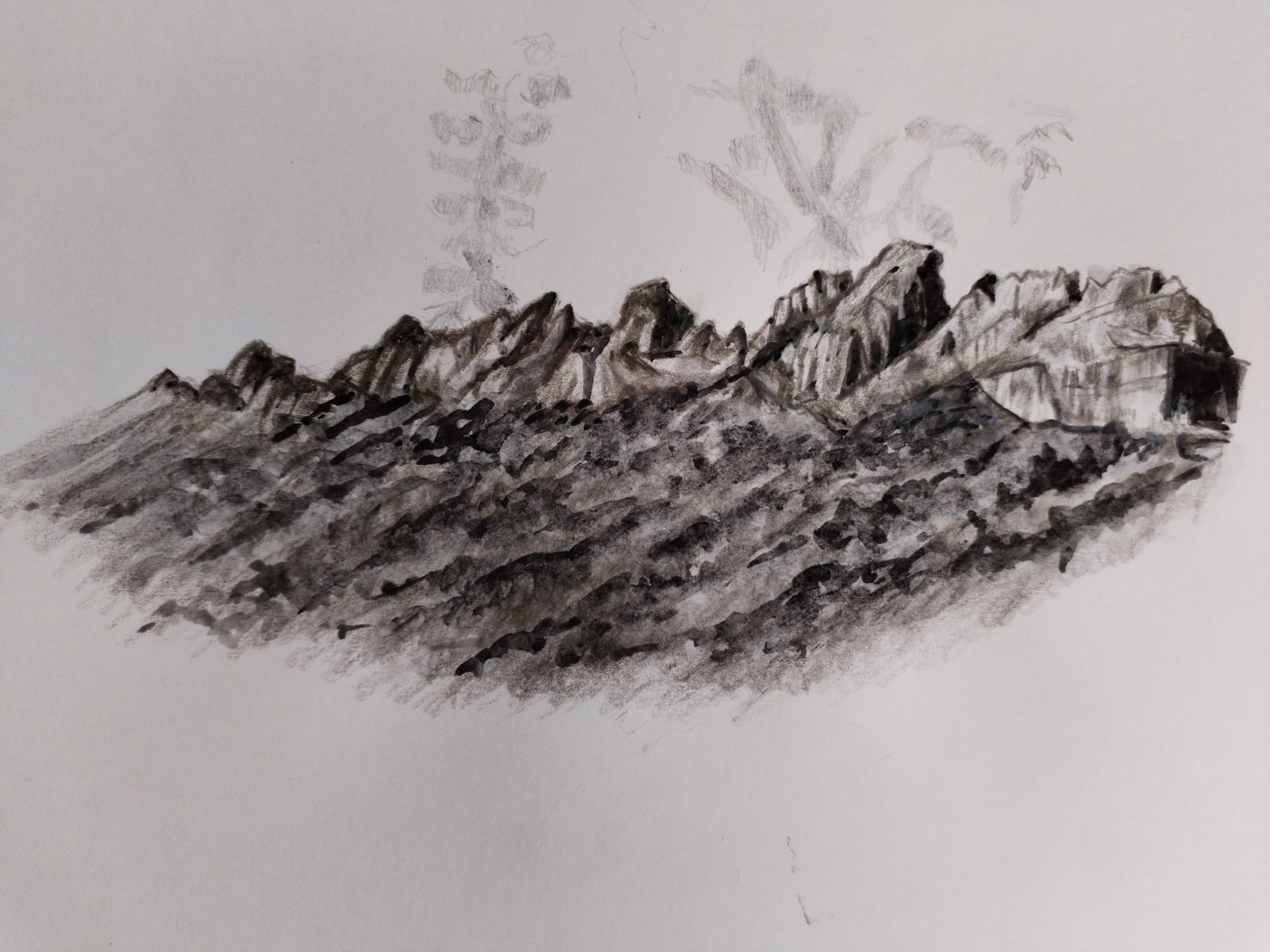 |
| Sierra Fría – Valencia de Alcántara © Fátima Gibello |
Chapter 5 begins…
“As you leave the tiny village of Las Huertas de Cansa,
a jagged grey shark fin rises out of a patchwork of changing green. The
bluff cuts across the horizon like a megalithic dorsal fin of craggy granite,
making the way seem impassable until a chink in its sharp, serrated teeth
appears and allows the two-lane highway to slip through. Trees and undergrowth, like willows and birch, that wouldn’t look out of place in the milder
Atlantic regions of the country, cluster around the multiple courses of
water. These sculpt the valleys and feed into the Rivera Avid while, higher
up, cluster pines embroider the hills. The Sierra Fría, in the western
reaches of the province of Cáceres, is a colossal rock formation you feel
instinctively drawn to. It’s a prehistoric landmark, the kind that resounds
somewhere deep down in our DNA, somehow answering our evolutionary
needs and desires for resource-rich environments that promise food,
shelter, comfort, and, of course, beauty. Juanma was definitely right; it
was more than impressive, but standing at its feet, it seemed more like a
wall than a hike.”
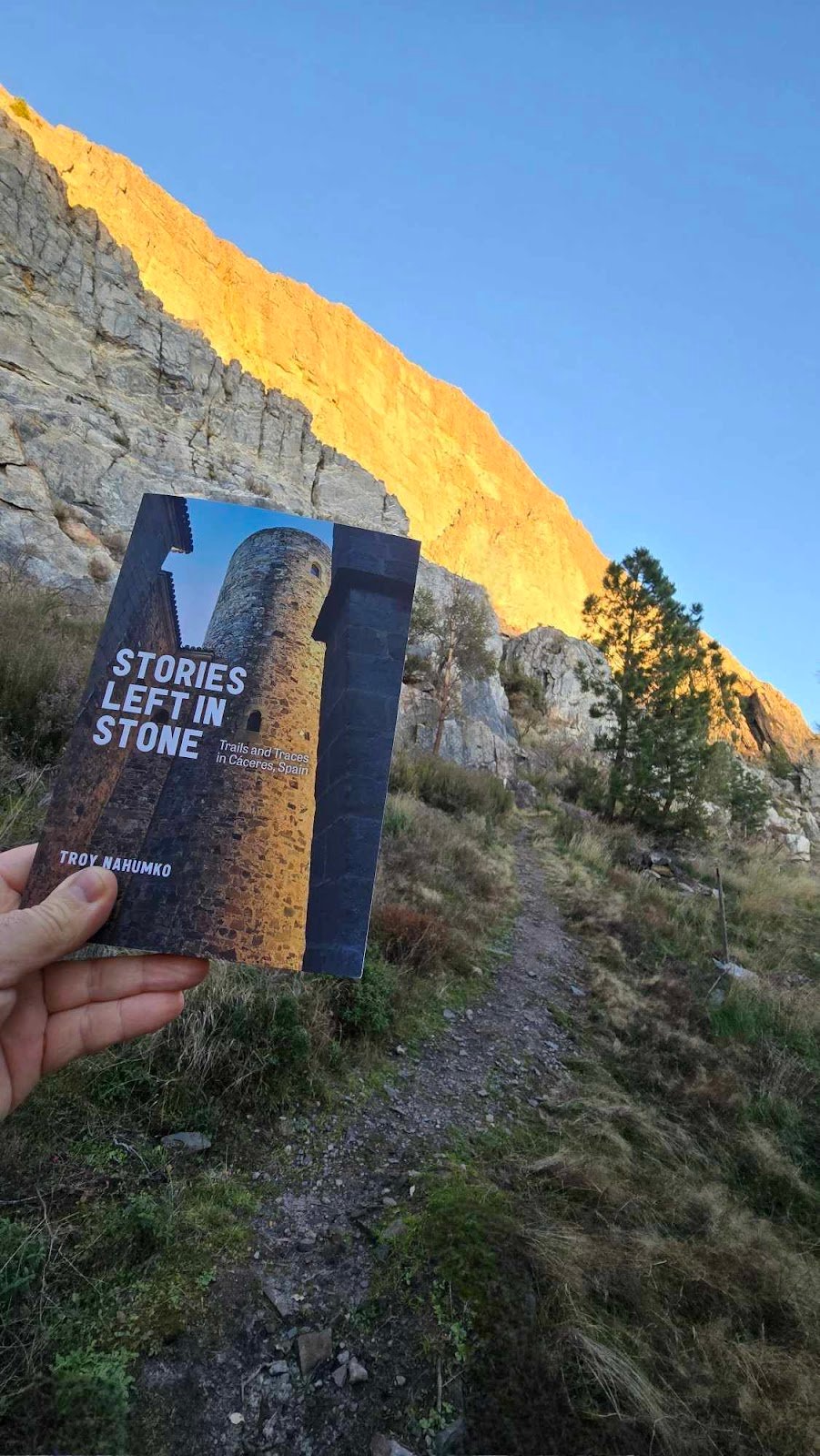
“This is La Raya, the sometimes-imaginary rift that marks the border
between Spain and Portugal. This geological singularity has been
attracting people since the hominids that spread out of Africa to leave their mark in places like the Maltravieso cave. In their wake they left a
rich trove of prehistoric graffiti and dolmens around the province. Out
here, hidden among these stratified rock folds, like the cave in Cáceres,
you find art from some of the first Europeans. And the chain in front of
us is the westernmost stop in the province along the Prehistoric RockArt Trails.”
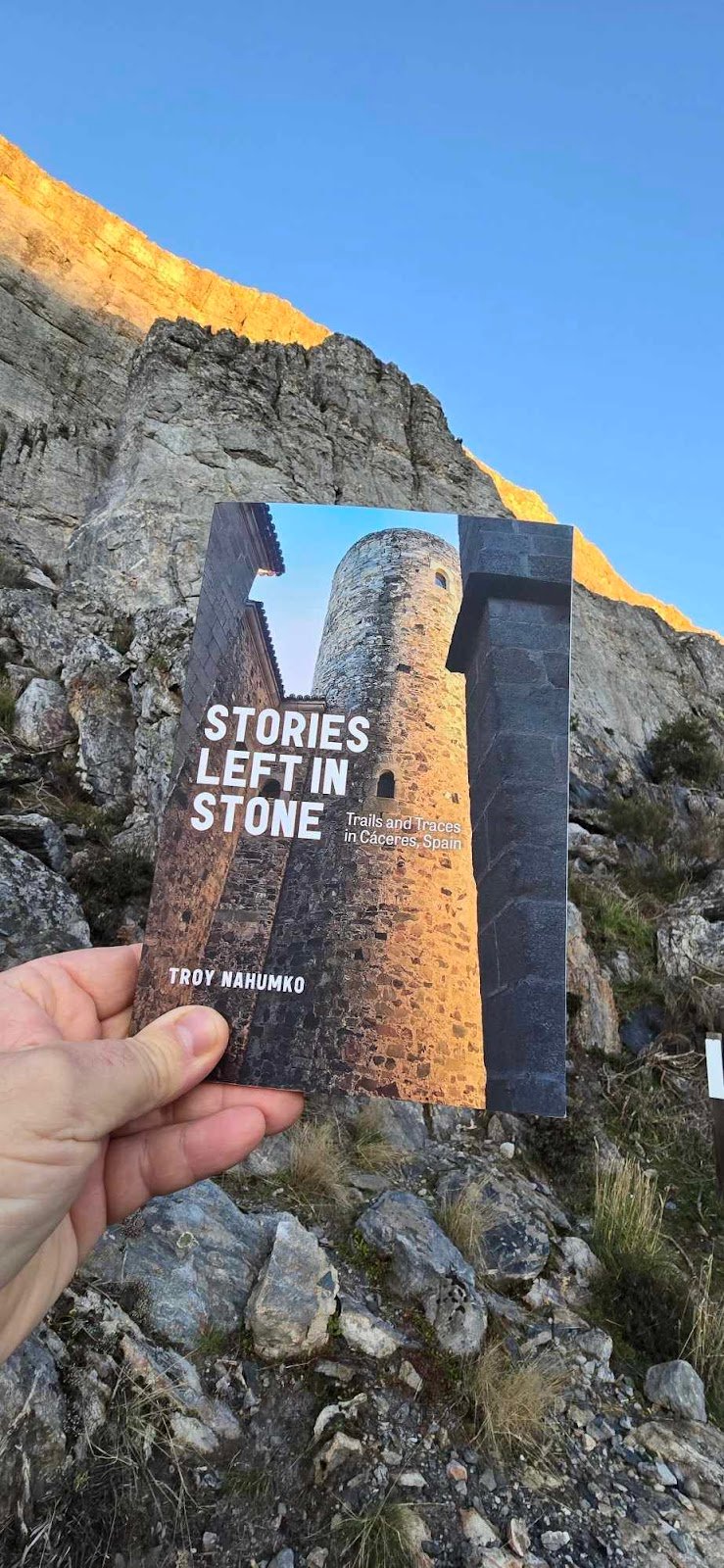
“A shiny blue EU sign welcoming you to Portugal stands among a past
that has since been left behind. The derelict border post that once registered everyone’s coming and going between countries is now a hollow
shell of broken windows and tattered posters announcing bullfights on
both sides of the border. The abandoned buildings of what used to be a
hard border stand disused and moldering by the sides of the road. Stark
reminders of how unnecessary they are between countries that share so
much in common. Just up the highway on the Spanish side we found the
trailhead to the four-hundred-metre, well-marked trail up to the paintings. You have to hop over the guardrail to access the well-marked trail,
complete with an information panel at the bottom, but thankfully traffic
was light.”
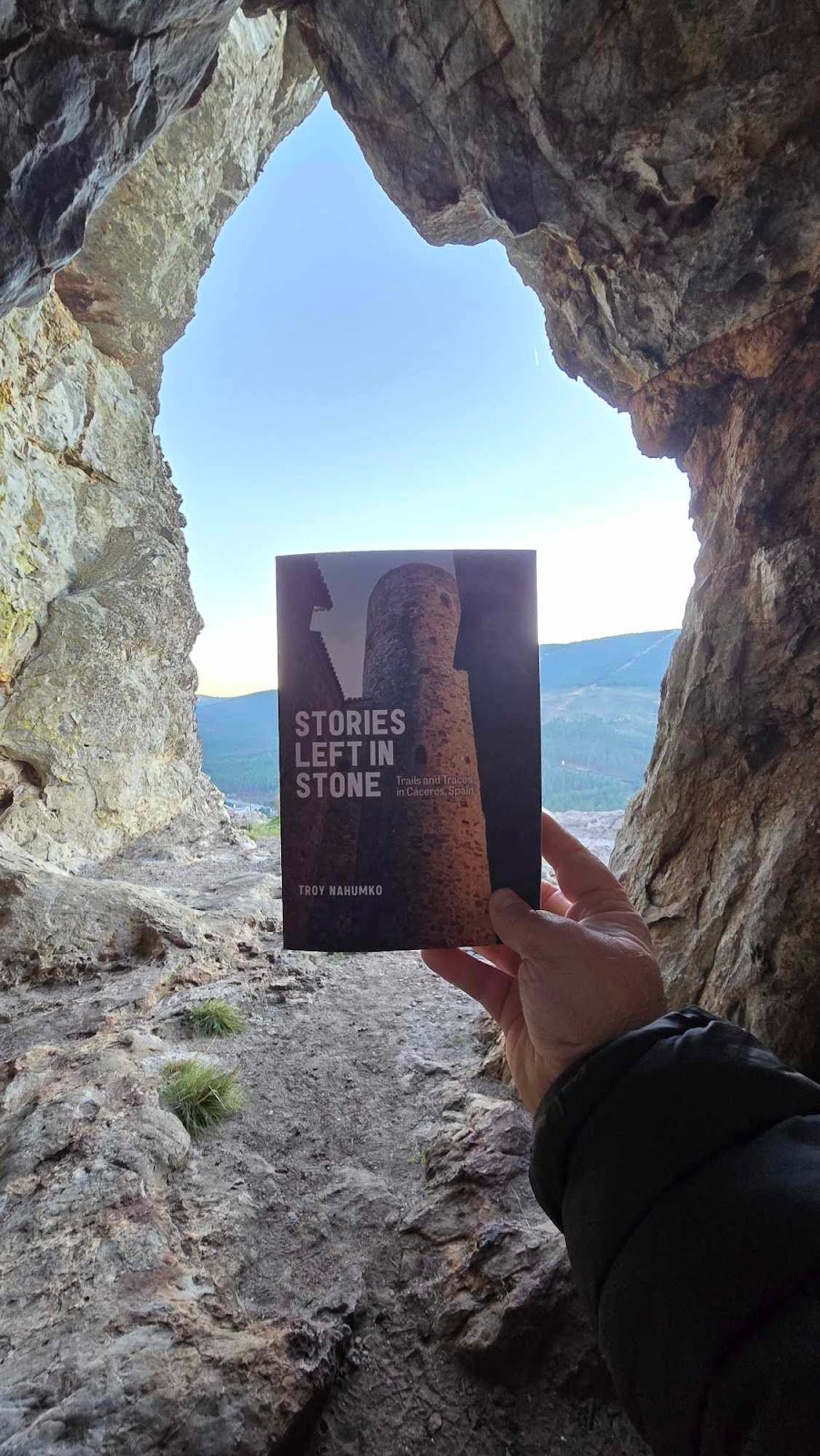
“In less than half an hour we came to a slight alcove in the rock with all
of Portugal spread out in front of us. Portugal is a country of supernatural
pageantry, as the Nobel Prize-winning author José Saramago describes it
in “The Sermon of the Fishes” in his travel book, Journey to Portugal, and
this view proved his words true. We were standing on a rock shelf big
enough to accommodate several families. The alcove itself didn’t offer
much protection from the elements, but it would have been very easily
defended as you could see anyone or anything coming for miles around.
The 974-metre Sierra Fría across the valley was scarred by forest fires and
was sliced up in cross-sections by fire cuts. The northern slope is Spanish,
while the southern slope falls away into Portugal with a thicker fire cut
drawing the line that divides the two.”
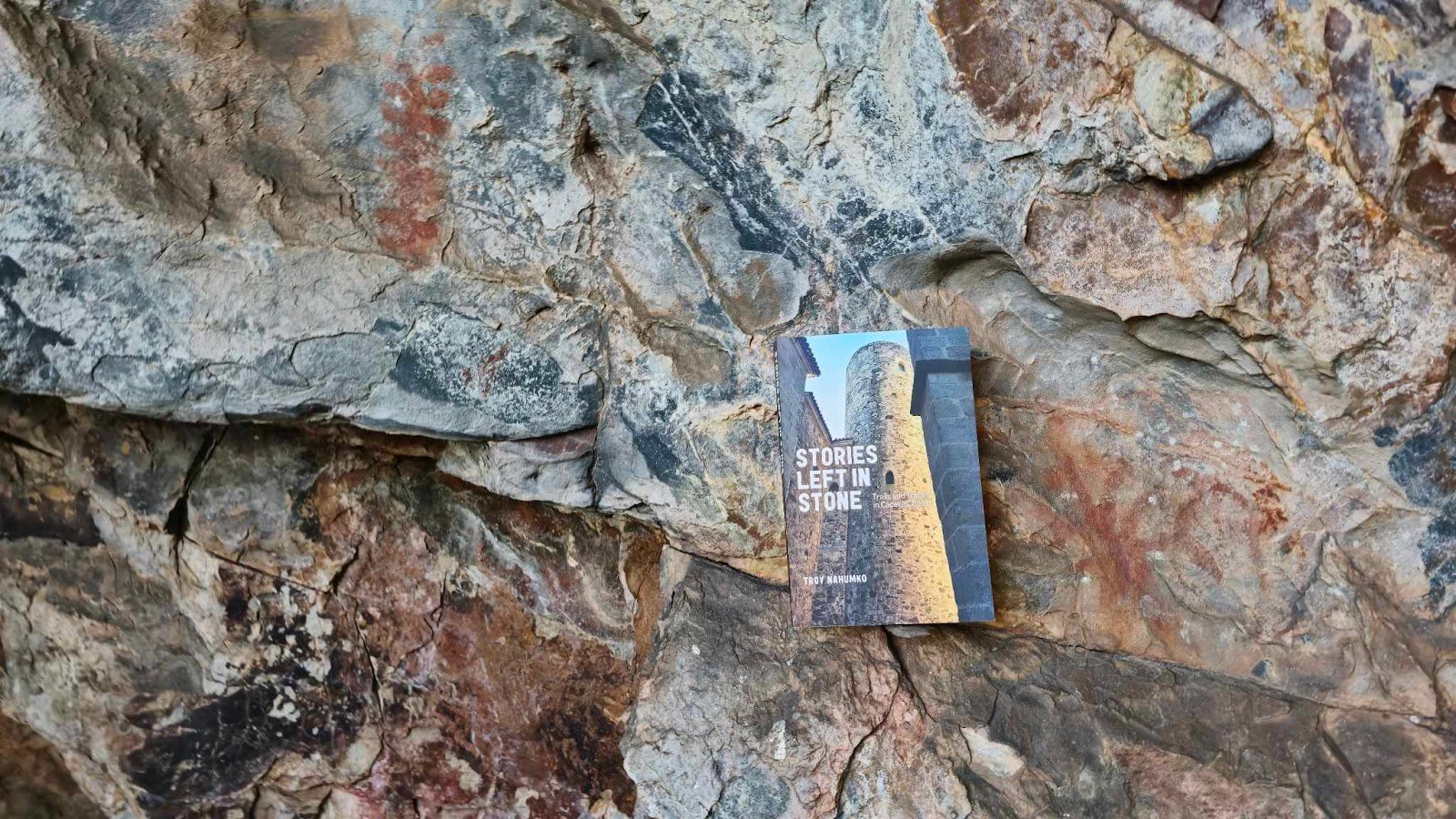
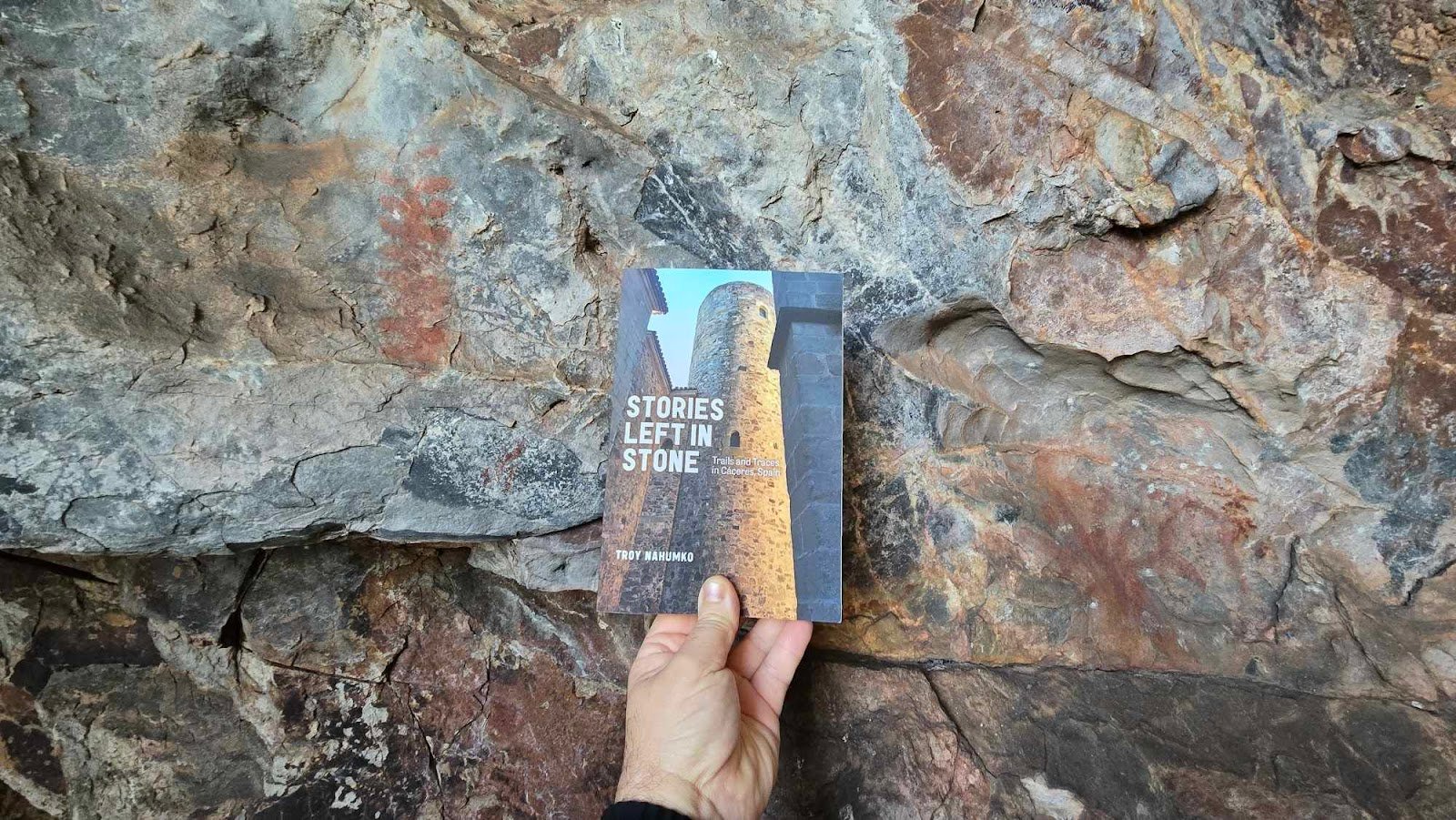
“The sun was bright and half of the rock shelf fell in the shade, making
it difficult to adjust our eyes to the contrast. My eyes were drawn into the
deepest recess in the rock and there I saw the first motif, looking like a
stitched-up reddish wound on the rock face. Down below it I also made
out other symbols, though these were less clear. The brutal onslaught of
seven thousand summers had taken their toll on the paintings, but many
were still clearly visible. I scanned the rock for more, sometimes mistaking irregular patterns of iron ore left behind by eons of dripping water
that had stained the fissures and cracks in the rock for paintings. Neon
green lichen covered honeycombed sections of the rock in the shadier
areas, adding another hue to the pallet of reds and greys.”
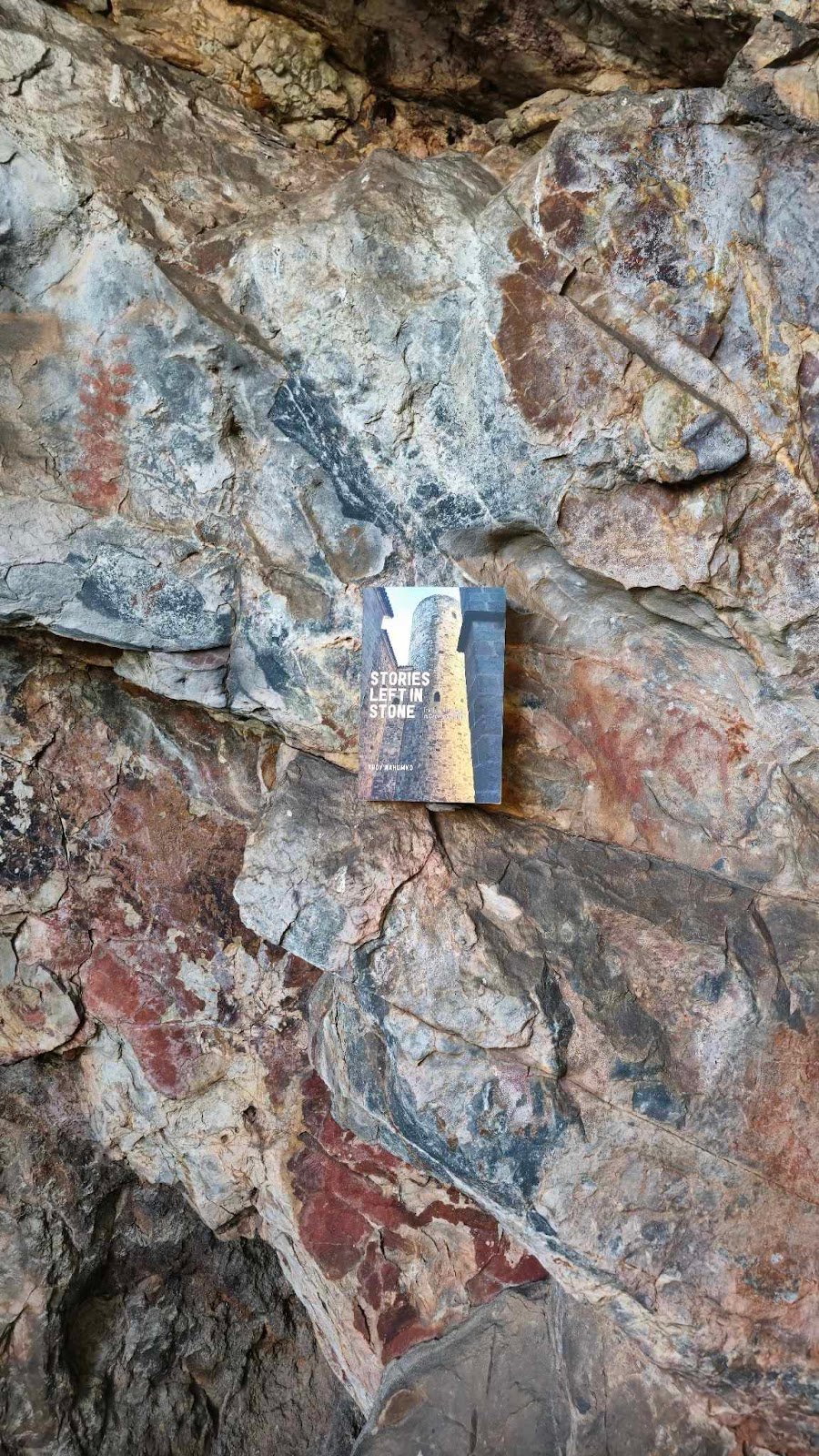
“What you can’t do with these paintings is disassociate them from their
surroundings. Without the setting and the landscape that surrounds
them, they lose context. The handprints on the cave were not only symbols but symbols that had been placed in a specific place. The oldest
handprints in the deepest reaches of the Maltravieso cave were not put
there because someone happened to be passing by. There was a specific
purpose. Up here on this rocky outcrop, the same was true. The artists
had chosen to leave their mark here, for the sights or even for the sound,
but it had been a conscious choice. No matter the exact meaning, what I
understood is that beauty was equally important to them.”
Photographs by Juan Carlos Jiménez Durán