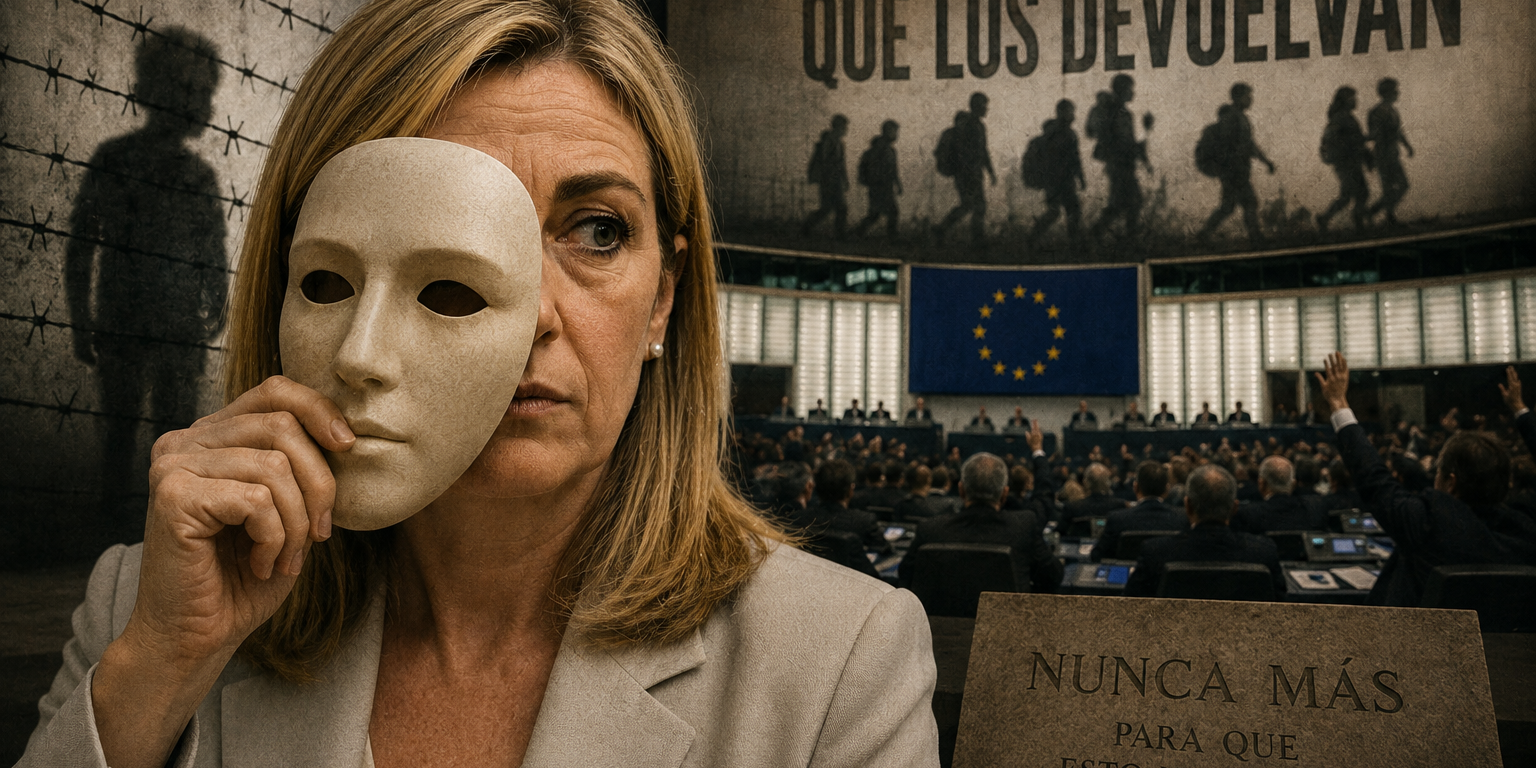
The Unmasking
This week’s Camino a Ítaca grew out of two events that, taken separately, might seem unconnected. The first was the debate in the European Parliament over proposals that would make it easier to deport asylum seekers to third countries with which they have no meaningful connection. The second was much closer to home: the decision by the regional government of Extremadura to adopt the language and framing of Spain’s far right in its response to unaccompanied migrant children.
The essay is not an argument about immigration policy. Democracies will, and should, disagree over how migration is managed. What interests me is something more unsettling: the moment when ideas that once had to disguise themselves discover they no longer need to. The moment when prejudice ceases to whisper and begins to speak in the language of institutions.
That is what The Unmasking is about.
The column was published in Spanish in HOY under the title “Desenmascarar.” If you read Spanish, you can find the original here:
The English version below:
The Unmasking
It began quietly. A few voices on the right, tentative at first, testing the air. Then others looked around, saw they were not alone, and the chant swelled: Send them back. What followed was not so much an expression of conviction as a release, the particular giddiness of people discovering, in public, that they need no longer pretend.
The masks came off.
And what made it obscene was the setting: the European Parliament, an institution conceived in the rubble of the continent’s worst episodes of organized dehumanization, was now celebrating the architecture of a new tiered humanity: a legal framework to classify, detain, and deport people to third countries with which they have no connection whatsoever.
The racists were always there. Yet, for a brief, improbable interlude, science helped, Graves, Marks, Tishkoff, making it unmistakably plain that race is a social fiction, a taxonomy of sunlight, a story we told ourselves that turned out, on inspection, to have no biological foundation whatsoever. The us and the them, the oldest and most murderous of human hobbies, seemed, if not finished, at least embarrassed into silence.
It wasn’t.
That chant does not stay in Brussels. It travels. It finds the corners, the forgotten places, the regions that have spent centuries exporting their own people to wealthier lands, and it arrives here too.
María Guardiola was not, one suspects, someone who thought of herself as a racist, more the kind who tightened her grip on her handbag and told herself it was common sense. But the mask is a peculiar thing, wear it long enough beside those who have removed theirs, and you begin to forget which face is which. Her government has aligned itself with measures like the far right’s campaign against unaccompanied migrant minors, demanding age-testing, threatening legal action, reaching for the language of “fraud” and “imposition.”
Some procedural concerns here are legitimate, rigorous and consistent verification protects children as much as it protects systems. But that is not what this is. This is a government of one of Europe’s most historically emigrant communities using children as the stage for its performance of alarm. They have found their other.
But the shame does not belong only to them. Look at what the ‘unbiased’ did, or rather, failed to do. By failing to apply existing protections consistently and transparently, they left a door open that should have been kept shut. They gave them the mask of rationality, and now they are handing it to others, and others are putting it on, and finding, to their own surprise, that it fits.
The genie is out. The last time this happened, the rooms where it was released eventually became the rooms where the paperwork was signed, efficiently, with the correct stamps. It then took the better part of the twentieth century and tens of millions of dead to stop it.
Look around. The masks coming off in rooms built, specifically, so that this would never happen again. The celebration. That is the most chilling part. We have been here before. We know how it ends. The only question, the one nobody in those rooms is specifying, is how long it takes to get there.